
Multi-child homeschooling
The best homeschool curriculum for multiple children
Family-style curriculum works best when children share stories, history, science or discussion while skill subjects remain individually placed.
By Homeschool Best editors · Updated September 1, 2026 · 9 min read

The short answer
Sonlight, BookShark and Beautiful Feet Books are the clearest shared-reading choices; The Good and the Beautiful mixes reusable family subjects with level-specific skill work; Notgrass can work well for siblings near the same history level; CTCMath is the practical digital value pick when many children need separate math paths.
How we chose
We favored products that explicitly support shared teaching or family access, then surfaced consumables, skill-level separation, worldview and scheduling complexity. We did not equate a family license with a family-style curriculum.
Our picks
1

Sonlight
Best literature-rich Christian family spine
- Best for
- Families who want siblings to share read-alouds, history and discussion.
- Watch for
- The reading load is substantial, worldview is Christian and skill-level consumables remain individual.
- Price
- $850-$1,500 for many all-subject yearly packages
2

BookShark
Best secular literature-based family option

- Best for
- Parents wanting a book-rich shared history and literature experience without Sonlight’s Bible component.
- Watch for
- Large book packages cost more upfront and daily reading still demands parent time.
- Price
- $800-$1,400 for many all-subject packages
3

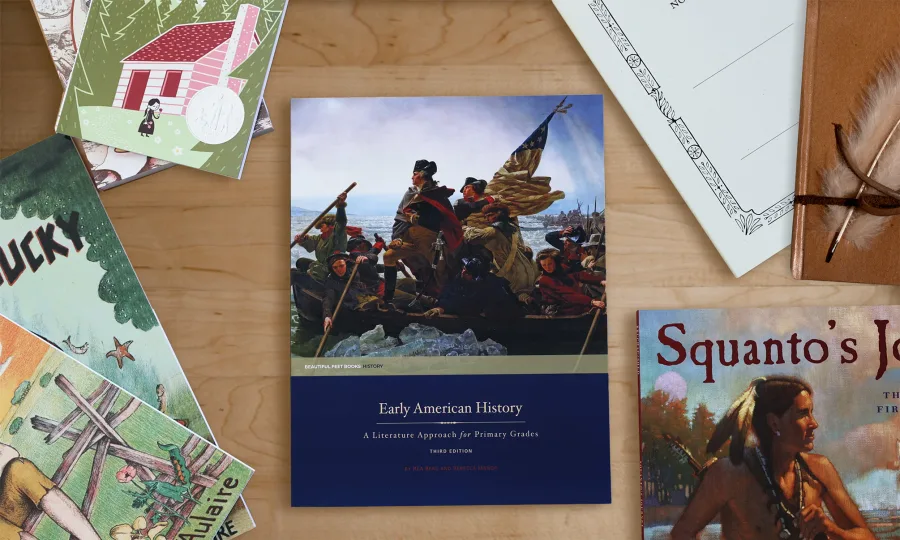
Beautiful Feet Books
Best flexible literature guides
- Best for
- Families who want to organize history or geography around living books and discussion.
- Watch for
- It is not a complete all-subject solution and availability of specific books can shape cost.
- Price
- $100-$300+ per course pack
4

The Good and the Beautiful
Best mixed reusable and level-specific system

- Best for
- Families who want some shared science/history alongside individually leveled language arts and math.
- Watch for
- “Open and go” still creates printing, materials and multiple-level coordination; worldview should be reviewed.
- Price
- Free PDF courses; printed sets commonly $25-$100 per subject/level
5

Notgrass History
Best shared history for close-age siblings

- Best for
- Independent readers near the same level who can share history content and family discussion.
- Watch for
- Reading and writing expectations may need adaptation across ages.
- Price
- $120-$250 per course set
6

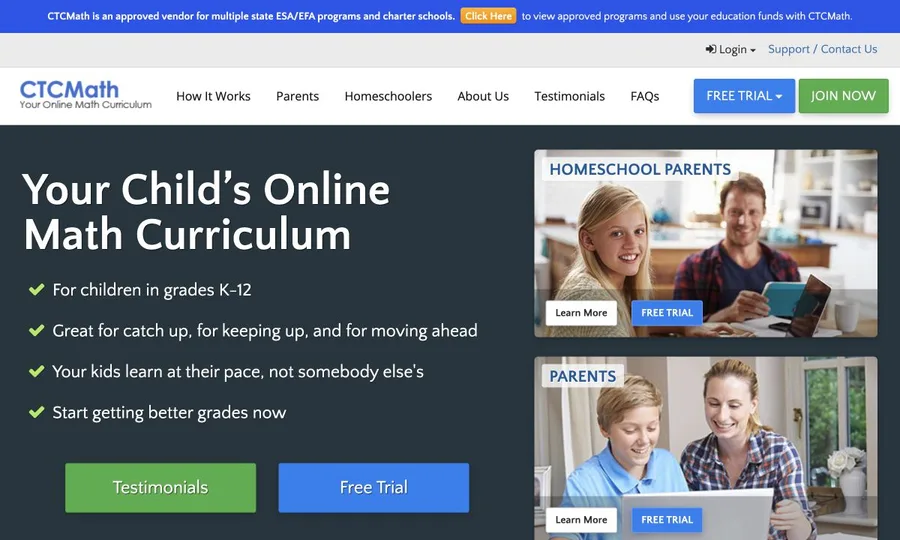
CTCMath
Best digital value for sibling math
- Best for
- Households needing several separate math paths under a family-oriented subscription.
- Watch for
- A family price does not guarantee the teaching format suits every learner.
- Price
- $120-$200/year, frequent homeschool discounts
Combine content; separate skills
History, science, geography, literature, art and read-alouds often support a shared family conversation. Math, phonics, spelling and much writing are cumulative skills that usually need individual placement.
Trying to force every subject into one shared level can save scheduling time while quietly underserving both the oldest and youngest child.
Price the second and third child
Reusable books and instructor guides can make a premium package economical over time. Consumable workbooks, online seats, lab supplies and replacement readers change the calculation. Build a household total for the actual children using it this year.
One room does not require one assignment
Children can listen to the same read-aloud and respond differently: narration for one, a map for another, source comparison for an older learner. Family learning is a shared subject, not identical output.
Common questions
Can siblings share one curriculum level?
They can often share content subjects when ages are close, but foundational skill subjects should follow individual readiness and placement.
Is a family subscription always cheaper?
Only if several children use it successfully. Compare household annual cost, consumables and likely usage—not the headline monthly figure.
Will an ESA pay for shared curriculum?
Programs may require purchases to be assigned to a specific eligible student even when materials are reusable. Follow the program’s allocation and documentation rules.