
Planning and recordkeeping
The best homeschool planners—and who should skip them
A planner should reduce the number of decisions you carry in your head. If maintaining it becomes a second curriculum, the system is too elaborate.
By Homeschool Best editors · Updated September 6, 2026 · 8 min read
The short answer
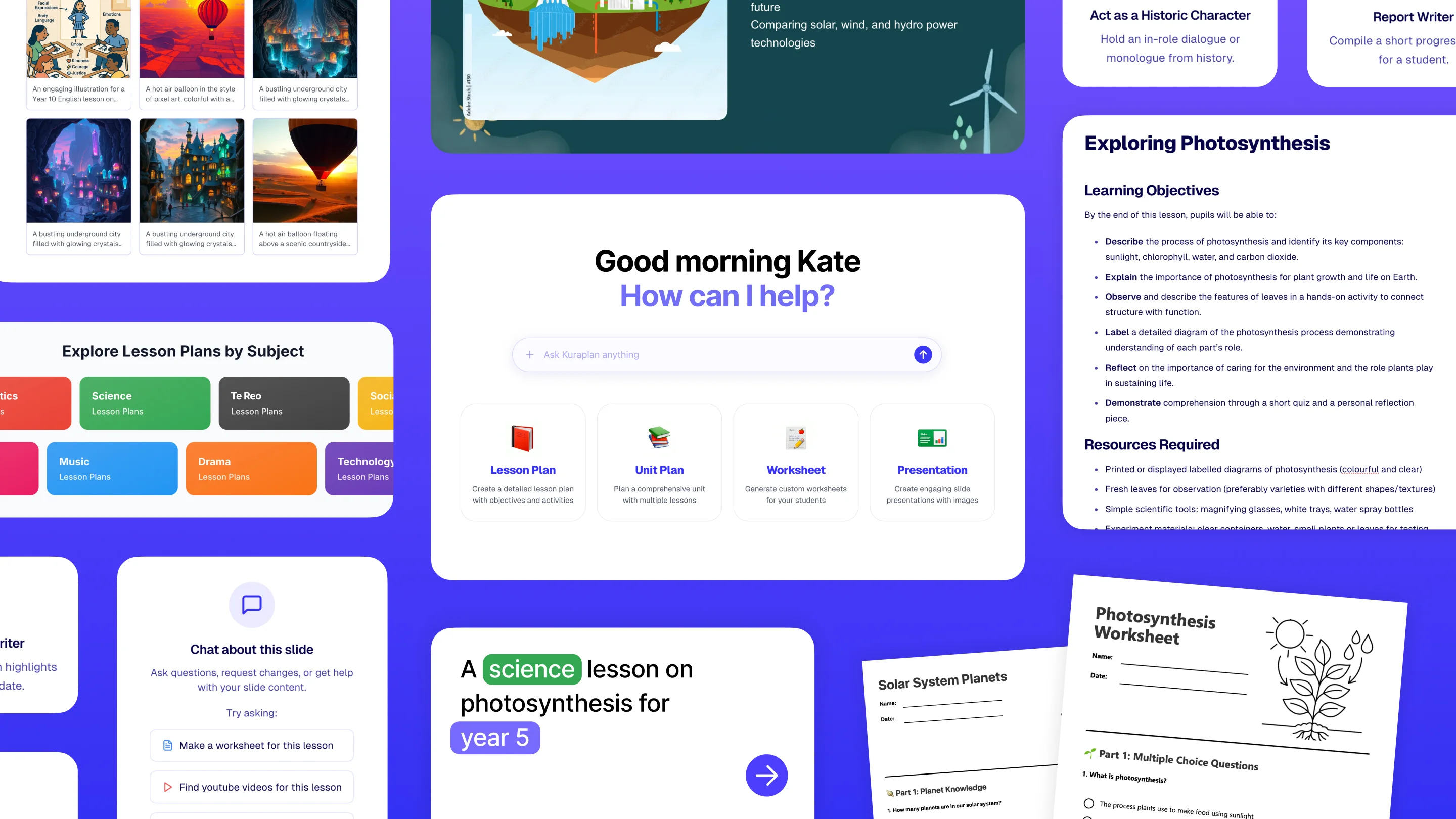
Kuraplan is the strongest AI-assisted option for generating custom plans and teaching resources; Homeschool Planet is the strongest dedicated scheduling and recordkeeping system; Well Planned Gal suits families who prefer printable or guided planning products; and Schoolio is useful when planning and curriculum need to live together. A simple spreadsheet or paper week can still beat them for a small, flexible household.
How we chose
We judged planners by the job they actually perform: generating teaching materials, rescheduling work, coordinating multiple children, producing records and reducing recurring maintenance. We also considered household pricing and preserved the distinction between AI planning workspaces, dedicated schedulers and printable systems.
Our picks
1

Kuraplan
Best AI-assisted homeschool planning workspace
- Best for
- Parents who want to turn goals, curriculum references and learner needs into editable lesson plans, units, worksheets and slides.
- Watch for
- Arizona ClassWallet DirectPay vendor; Utah and Louisiana vendor-approved, with product review still required.
- Price
- Free plan; Pro $9/month, with annual pricing and promotions varying
2

Homeschool Planet
Best dedicated digital planner

- Best for
- Multi-child households needing assignments, rescheduling, reports and a central family calendar.
- Watch for
- Initial setup and imported lesson-plan behavior can be fiddly; value depends on keeping the system current.
- Price
- $70-$80/year
3

Well Planned Gal
Best printable and guided planning system
- Best for
- Parents who think better on paper and want homeschool-specific layouts and planning products.
- Watch for
- Physical systems do not automatically reschedule or generate records, and consumables may recur annually.
- Price
- $40-$100/year or per planner/product
4

Schoolio
Best curriculum-plus-planning environment

- Best for
- Families who want lesson content, scheduling and progress tools inside one platform.
- Watch for
- It is more platform than planner; families bringing an external eclectic curriculum may not need the rest.
- Price
- $20-$70/month depending on access and family plan
5
A simple spreadsheet
Best free option
- Best for
- One or two learners, flexible weeks and parents who only need dates, subjects, links and completion status.
- Watch for
- Reports, transcripts and recurring assignment logic require manual design. Do not build a database when six columns will do.
- Price
- Free with tools many families already use
6
A paper weekly sheet
Best low-maintenance option
- Best for
- Young learners and households that plan one week at a time and value visible independence.
- Watch for
- Long-term records and rescheduling remain manual; photograph completed weeks if documentation matters.
- Price
- Paper and printing cost
Choose the record you actually owe
Attendance, subject logs, portfolios, grades and transcripts are different records. Start with your state and household requirements, then buy the smallest system that reliably produces them.
A planner marketed to homeschoolers may still create more data than you need. Extra fields are not free: someone must maintain them.
Rescheduling is the killer feature
Homeschool weeks change. A useful digital planner moves unfinished work without duplicating it, losing notes or turning every future date into cleanup. Test this before importing a full year.
Paper remains excellent when the household deliberately plans in short horizons. Crossing out and rewriting five assignments may be faster than configuring rules.
Multi-child pricing needs a household view
Check whether the subscription covers a family or charges per learner, and whether archived students or graduates remain accessible. The cheapest first month can be the most expensive fifth year if records are trapped or sibling seats compound.
Common questions
Do homeschool parents need a digital planner?
No. Use one when automatic rescheduling, reusable lesson plans, reports or multi-child coordination will save more time than setup consumes.
Can a planner be an ESA expense?
Some programs permit planning or recordkeeping software; others may treat general productivity tools differently. Provider and exact-item evidence still matters.
What should a basic homeschool planner track?
At minimum: learner, date or week, subject, planned work, completion and any record your state requires. Add grades or hours only when they serve a real purpose.